AI Disclosure Rules Compared: Amazon KDP, Etsy, TPT and Gumroad (2026)
Disclosure: MakeBlogAI may earn a commission from some links on this site; this article contains no paid or affiliate links. It was researched and drafted with AI tools and checked by a person against the primary sources linked below. General information only — not legal, tax, or financial advice, and no income is promised or implied.
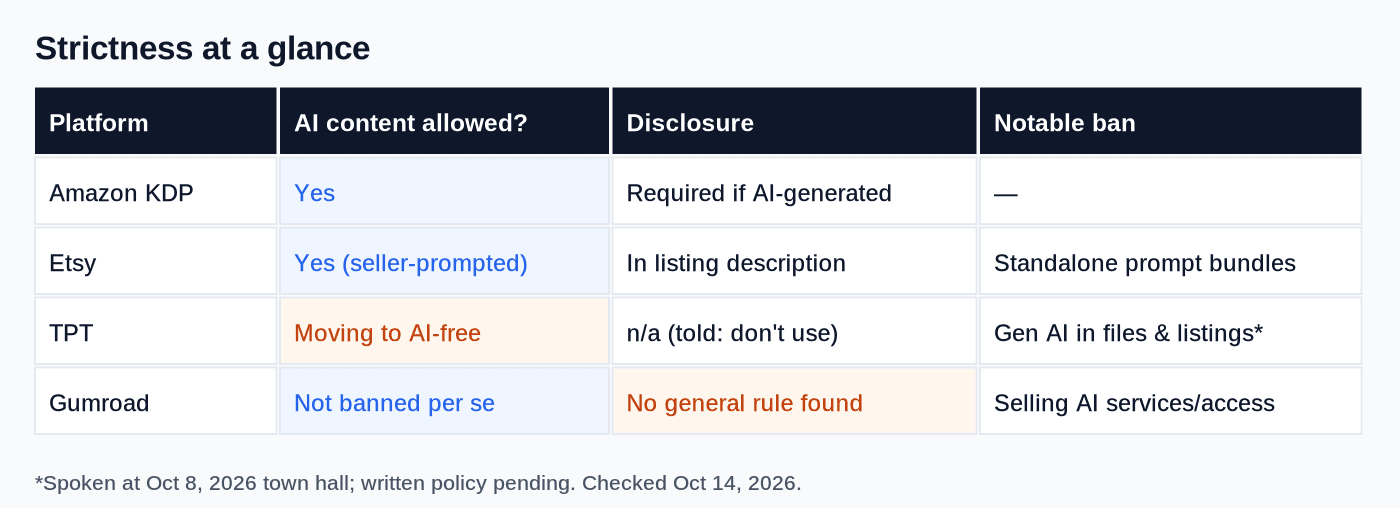
The short answer: Amazon KDP requires you to disclose AI-generated text, images and translations, but not AI-assisted editing or brainstorming. Etsy allows seller-prompted AI creations, requires disclosure in the listing description, and bans standalone prompt bundles. TPT told sellers on October 8 not to use generative AI at all, but hasn’t published the written rule yet.
Gumroad bans selling access to AI services, and we found no general disclosure rule. It does ban misrepresenting what buyers receive, including “authorship.”
The comparison table
| Platform | Rule (from the platform) | Source |
|---|---|---|
| Amazon KDP | “We require you to inform us of AI-generated content (text, images, or translations).” AI-assisted content: “It is not necessary to inform us.” | KDP Content Guidelines |
| Etsy | “Sellers must disclose within their listing description if an item is created with the use of AI.” “We prohibit the sale of AI prompt bundles.” | Etsy Seller Handbook |
| TPT | Spoken at the October 8, 2026 town hall: don’t use generative AI in resource files, covers, thumbnails, previews or descriptions. Written guidelines: sell only resources “you’ve produced or designed yourself.” | Town hall recap; TPT Seller Guidelines |
| Gumroad | Prohibited: “AI services which includes selling access to AI tools, chatbots, image or content generation services.” The Terms ban misrepresenting what a buyer receives, “its format, length, licensing or authorship,” along with unsupported earnings claims. | Gumroad Prohibited; Gumroad Terms |
Platform by platform
Amazon KDP: disclose what AI created
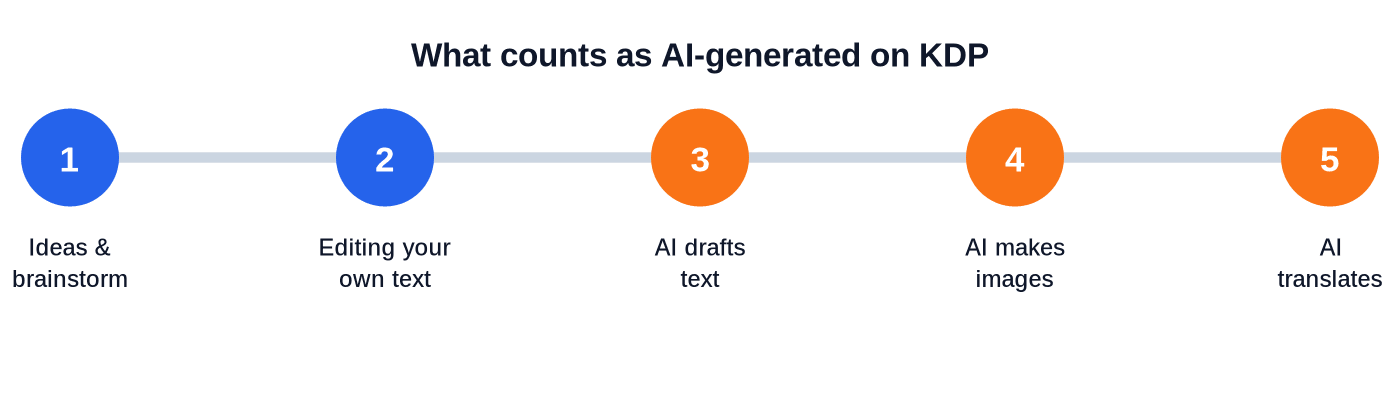
KDP draws the line at who created the content. If an AI tool produced the actual text, images or translation, it counts as “AI-generated” “even if you applied substantial edits afterwards.” If you wrote it yourself and used AI to “edit, refine, error-check,” or brainstorm, it counts as AI-assisted, and KDP doesn’t need to be told.
A cover generated with AI is AI-generated. Our KDP guide covers this in depth.
Etsy: disclose, and stay the creator
Etsy allows AI artwork based on “original prompts or inputs” from the seller. You must disclose it in the description, and the item has to be “made and/or designed by you.”
Prompt packs can’t be sold on their own. See our Etsy guide.
TPT: the strictest position, still unwritten
TPT described its goal as a marketplace that’s “teacher-created, classroom ready, and AI free,” and asked sellers to replace AI content in existing listings. As of October 14 the written policy wasn’t out. Our TPT explainer tracks what’s official.
Gumroad: no blanket AI ban, but strict honesty rules
Gumroad’s prohibited list targets AI services, such as reselling chatbot access, rather than products made with AI help. Some third-party sites quote a Gumroad rule that “entirely AI-generated” products must be labeled.
We couldn’t find that wording on Gumroad’s own pages, so treat it as unverified. Gumroad’s Terms do forbid misrepresenting “authorship,” so disclosing heavy AI use is the safer choice.
If you sell on more than one platform
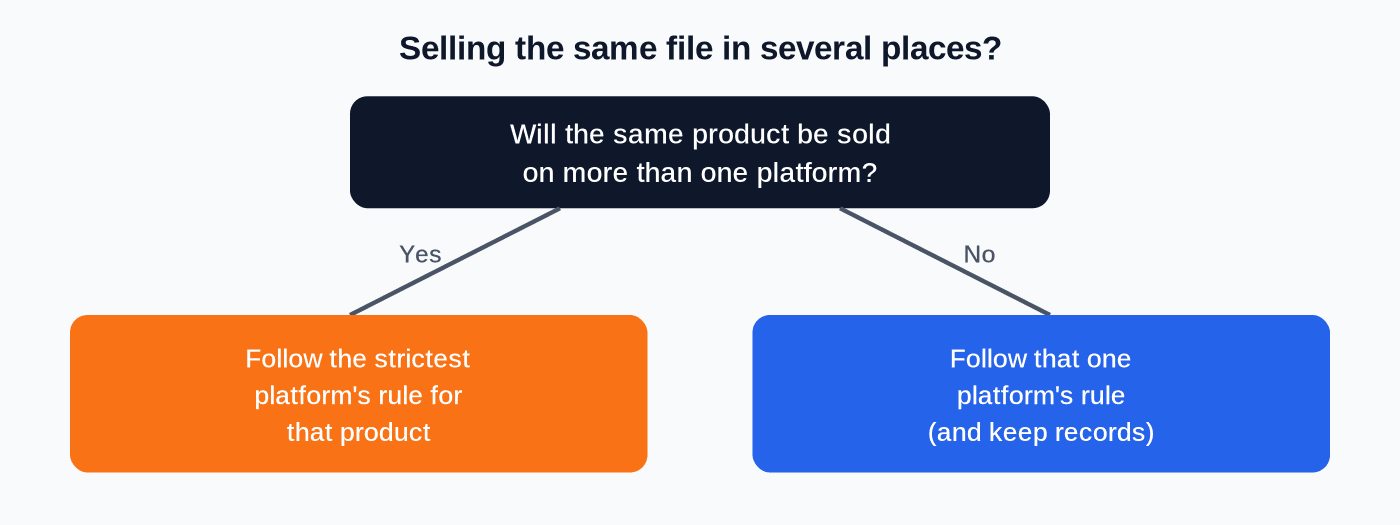
Many sellers list the same product in several places. The practical rule is that the strictest platform you sell a product on decides how you make that product. A teaching resource with an AI-generated cover might be fine on Etsy with disclosure and still go against TPT’s announced direction. Also check exclusivity: KDP Select and TPT’s Exclusive Seller membership can stop you selling the same item elsewhere (see the fee and tradeoff comparison).
Copyright is a separate question
Disclosure rules are platform policy. Copyright is law. The U.S. Copyright Office says purely AI-generated material isn’t protected by copyright and that “prompts do not alone provide sufficient control.”
Your own human contributions can still be protected. We explain this in our copyright guide.
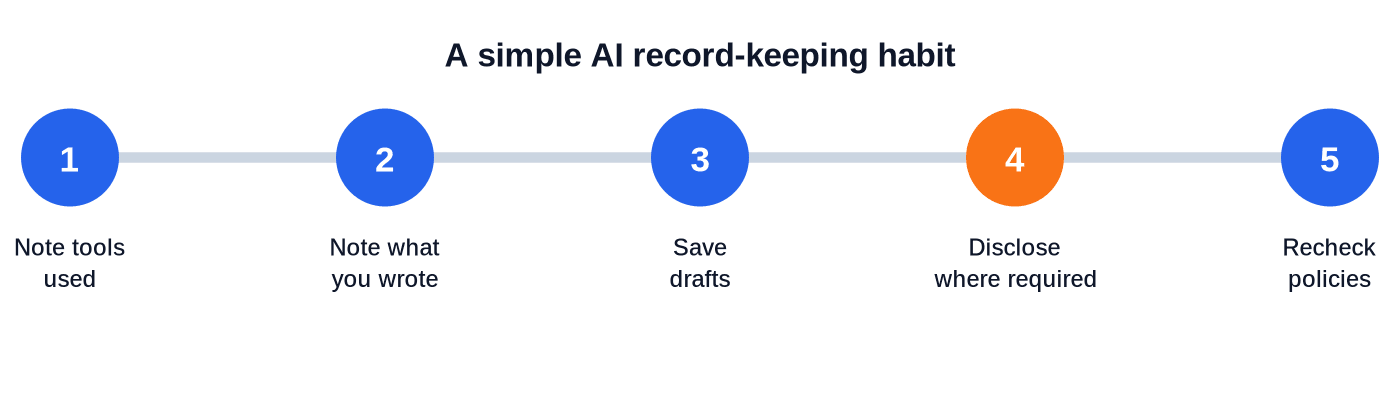
A record-keeping habit that helps everywhere
- For each product, note which AI tools you used and what for.
- Note which parts you wrote or designed yourself.
- Save your drafts and source files.
- Add the disclosure wherever a platform requires it.
- Recheck each platform’s policy page every few months, because these rules change.
Worked example: one workbook, four platforms
Say you made a reading-comprehension workbook. You wrote the passages and questions yourself, used AI to fix grammar, and generated the cover illustration with an AI image tool.
| Platform | What applies |
|---|---|
| KDP (as an ebook) | The text is AI-assisted, so no disclosure is needed for it. The cover is AI-generated, so disclose it. |
| Etsy (as a PDF) | Item “created with the use of AI” (the cover art), so disclose in the description. |
| TPT | TPT’s spoken guidance names cover images, so replace the AI cover with your own design before listing. |
| Gumroad | No AI-service issue. Describe the product honestly, and disclosing the AI cover is the safe choice. |
The simplest way to sell it everywhere is to make the cover yourself. Then the only AI use is grammar help, which KDP calls AI-assisted.
What counts as “AI-generated”: side-by-side
| Use of AI | KDP | Etsy | TPT (spoken) |
|---|---|---|---|
| Brainstorming ideas | Assisted, no disclosure | Not addressed explicitly | Unclear until written |
| Grammar or spell-check | Assisted, no disclosure | Not addressed explicitly | Unclear until written |
| Drafting text | Generated, disclose | Disclose | Don’t use |
| Cover or illustrations | Generated, disclose | Disclose | Don’t use |
Common mistakes
- Using one platform’s definition everywhere. “Assisted” on KDP isn’t a safe harbor on TPT.
- Forgetting covers and thumbnails. They’re named explicitly on KDP and TPT.
- Not re-answering on republish. KDP asks again whenever you edit and republish.
- Treating disclosure as permission to infringe. Every platform still enforces IP rules.
- Selling prompt packs on Etsy. They’re prohibited there.
FAQ
Do you have to disclose AI on Amazon KDP?
Yes, for AI-generated text, images or translations, even after heavy editing. You don’t need to disclose AI-assisted editing or brainstorming.
Does Gumroad allow AI-generated products?
Gumroad’s prohibited list bans selling access to AI services, not products made with AI. Its Terms ban misrepresenting “authorship,” so be honest about how the product was made.
Which marketplace is strictest about AI?
TPT. It said on October 8, 2026 that it’s moving to an “AI free” marketplace, though the written policy is still pending.
The bottom line
The platforms range from “disclose it” (KDP, Etsy) to “don’t sell AI services” (Gumroad) to “don’t use it” (TPT, pending the written rules). Be honest about how each product was made, follow the strictest rule wherever you sell it, and keep records.
Series: Selling Digital Products With AI Help. Pillar: Gumroad vs KDP vs Etsy fees · Etsy · TPT · Disclosure rules (you are here)